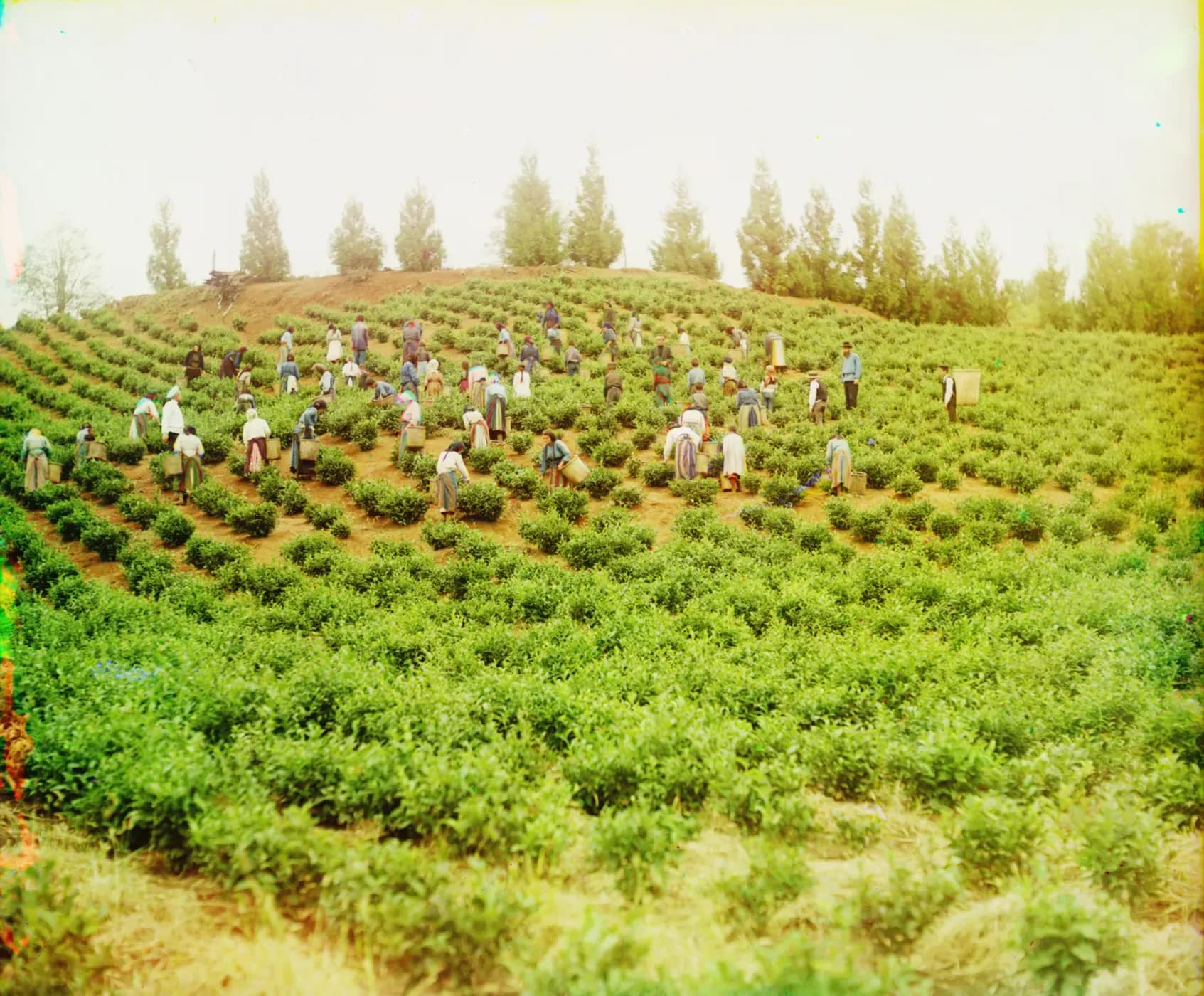

In the 1880s, the Chinese tea bush (Camellia sinensis) first appeared in Guria and other Colchic territories. This experiment, initiated by botanists of Tsarist Russia, astonished observers — tea developed optimally in Guria's humid, temperate climate.
The 1940s to 1970s became the golden era of Gurian tea. The Soviet tea-farming system made Chokhatauri and Ozurgeti secondary cities of tea — processing factories, laboratories, agricultural machinery — everything operated within this system.
After the collapse of the 1990s, many tea gardens fell into abandonment. However, from the 2000s a new wave began — handcraft, family-scale, organic tea brands that combine local tradition with modern market demand.