


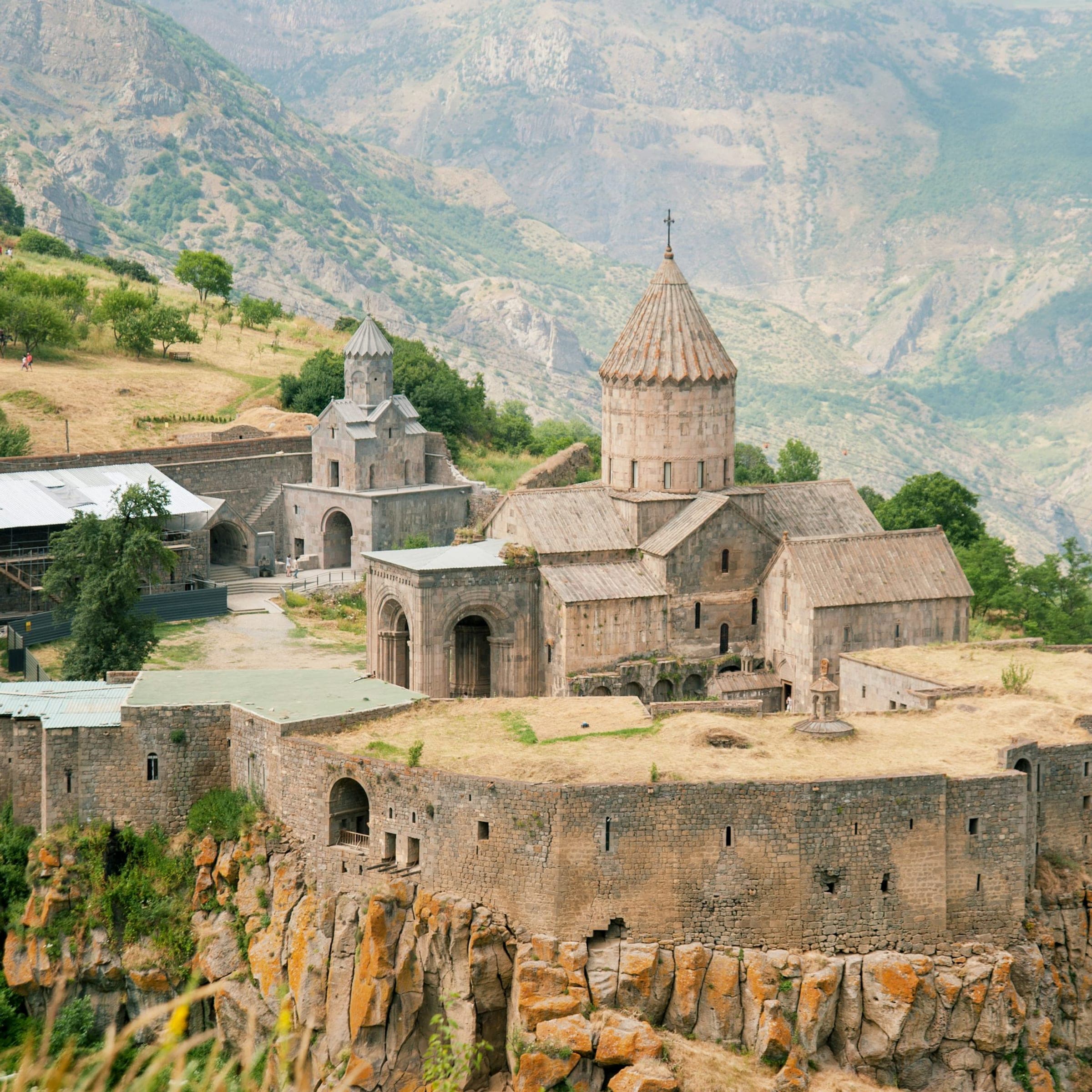
The early history of Erketi Monastery reaches back to the 7th–9th centuries, though the structure that survives today bears the hallmarks of 12th-century Georgian ecclesiastical architecture. This period, known as the Golden Age, coincided with many masterworks of Georgian religious art.
The carved stone and brick facades of the monastery, its compositional symmetry, and its masonry technique all speak to a local school of Gurian architecture. This tradition differs subtly from comparable monuments in north-eastern Georgia — shaped by the humidity of the local environment and the particular grade of locally quarried stone.
Today the monastery forms part of a cultural tourism route. Visitors can reach the church along a walking trail, explore the natural surroundings, and engage directly with the historical narrative. Guided tours are available through local heritage organisations.