
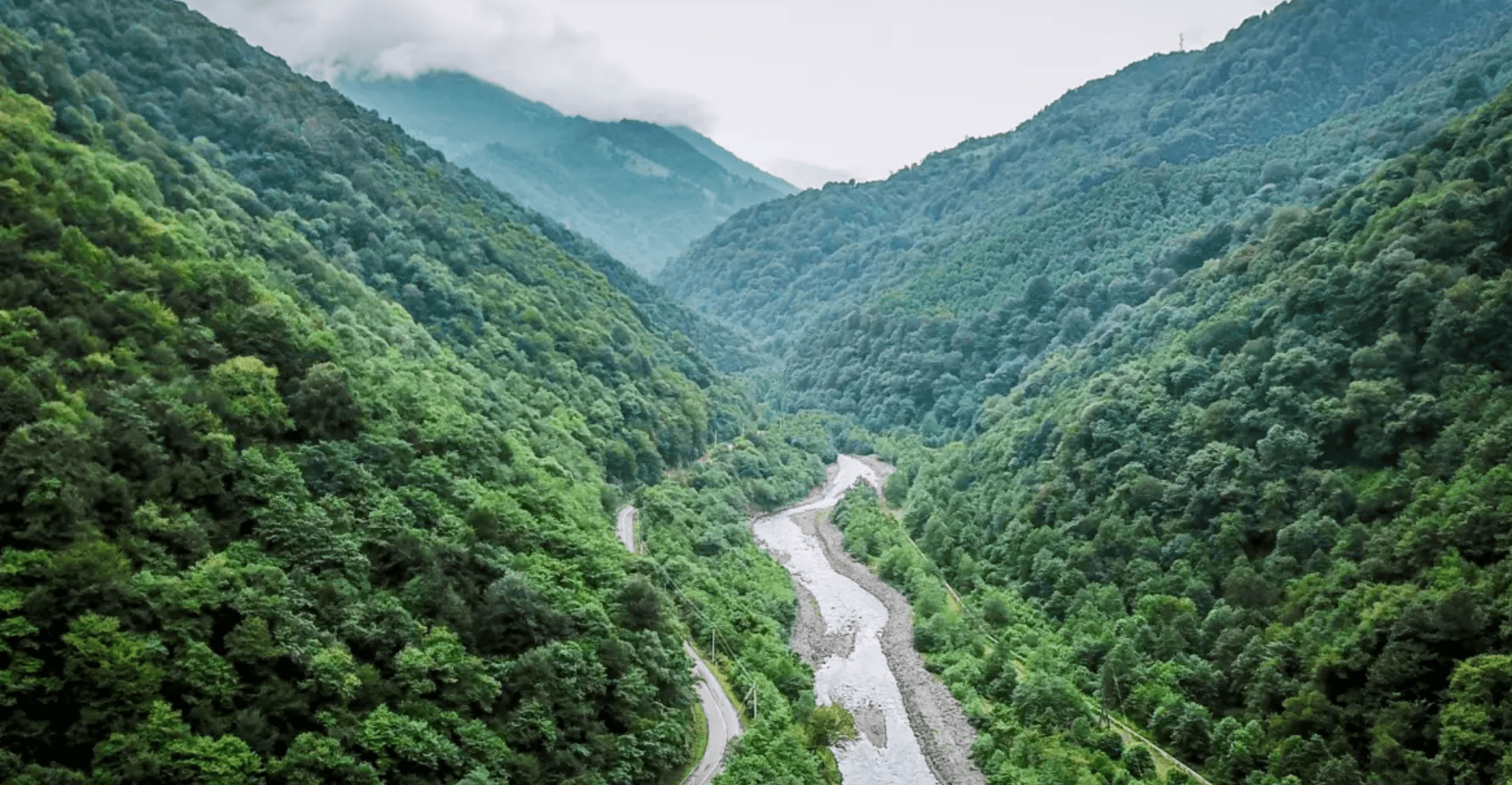
When following the tourist trails of Chokhatauri, and Guria in general, it is impossible not to notice the powerful hydro-network that shapes the region's unique biodiversity. A special place among them is held by the rivers, on whose banks life pulsates to a completely different rhythm.
The Gubazeuli River and Its Ecological Importance One of Chokhatauri's most prominent hydrological arteries-the Gubazeuli River (a crucial tributary of the Supsa River)-carries exceptional ecological value. Scientific research confirms that such mountain rivers play a decisive role in shaping the region's microclimate. The Gubazeuli gorge is distinguished by its cold, oxygen-rich, crystal-clear water, creating an ideal habitat for rare and vulnerable species such as the brown trout (Salmo trutta fario). This endemic species is the best natural indicator of water purity. The presence of trout means the ecosystem is healthy and minimally affected by human intervention.
The Colchian Forest Strip - The River's Protective Shield The Colchian forest strip stretching along the riverbank, rich in relict and endemic plants (alder, willow, wingnut, chestnut), performs a vital buffer function. The deep root systems of these plants protect the banks from erosion, filter rainwater, and maintain the moisture level necessary for the development of mosses and rare ferns. It is precisely this synergy between the forest and the river that creates the aesthetic and ecological perfection sought by eco-tourism enthusiasts and nature photographers from all over the world.
Responsible Travel in the Gubazeuli Gorge Utilizing recreational spaces by the river requires high environmental responsibility. The "River Care Quiz" integrated into the Chokhatauri tourist platform serves exactly this purpose-to raise visitor awareness about water cleanliness, bank protection, and proper recreational behavior. Before you pitch a tent, have a picnic, or go fishing on the banks of the Gubazeuli or Supsa, take our 4-minute quiz and make sure you leave nature exactly as you found it.
Note: The ecological, hydrological, and geographical facts cited in the articles are based on official data and research from environmental organizations.